sábado, 16 de febrero de 2019

ELIZABETH MAGIE-MONOPOLY


ELIZABETH MAGIE


 BIOGRAPHY:

·Birth: She was born in 1866 in Macomb, Illinois, United States.
·Death: Magie died 1948 (aged 82) in Staunton, Virginia, United States. She is buried with her husband, Albert Wallace Phillips, located in Virginia.
·Studies: Well-educated having been surrounded by economical and political talk.
·Place of residence:
She worke as a stenographer. She was algo a writer of shorts stories and poetry, a comedian, and theatre actress, a feminist and a engineer. In 1906 she worked as a newspaper repoter. In 1910 she married with Albert Phillips at the age of 44.


  INVENTION:
Resultado de imagen de elizabeth magie


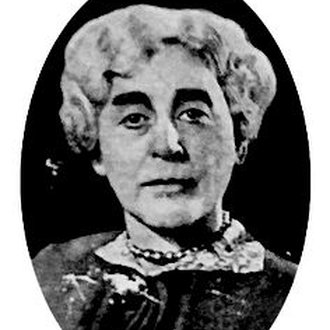
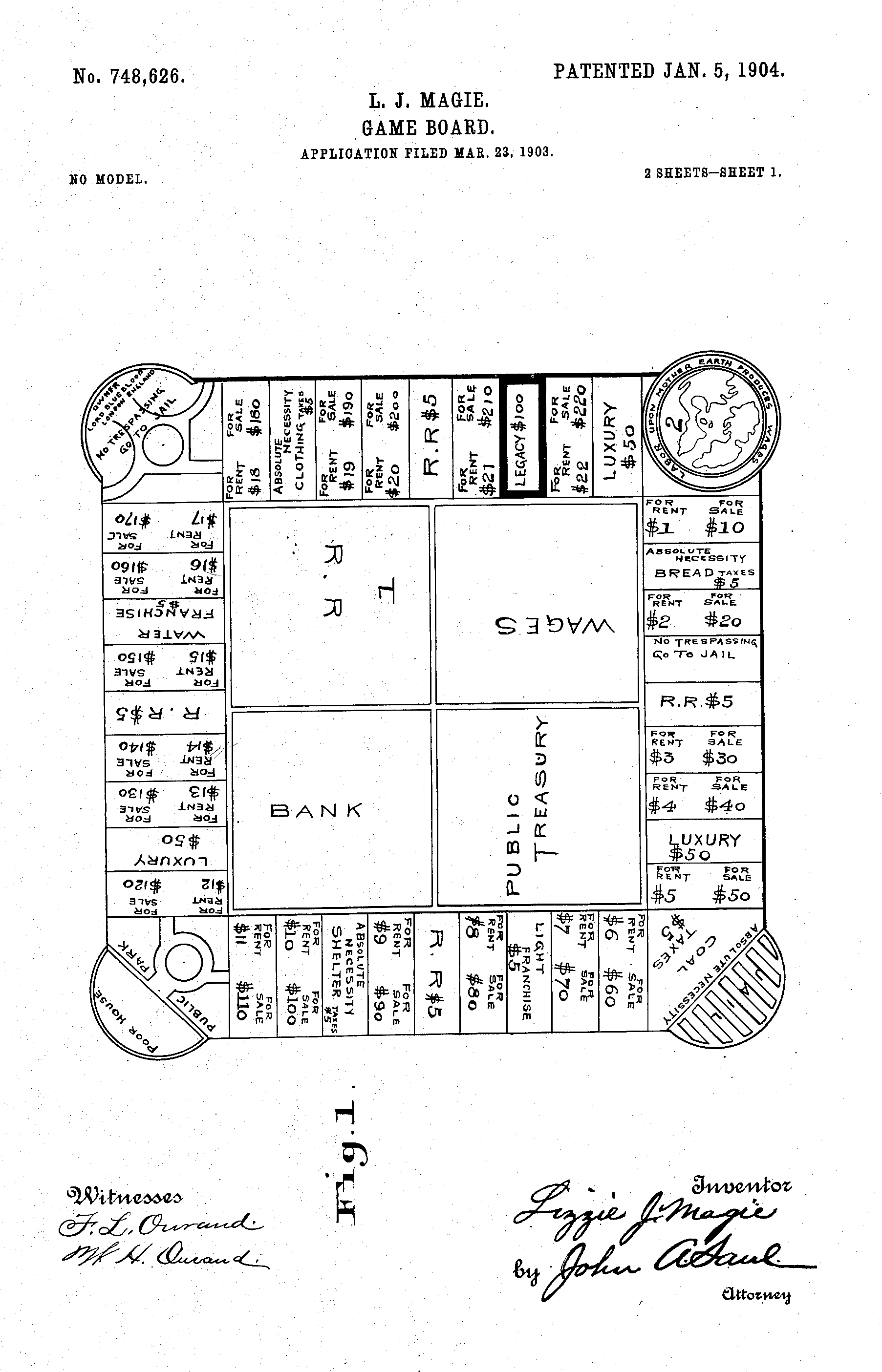
 Elizabeth Magie invented the Monopoly. She was a American games designer and georgana. She was the woman inventor of "The Landlord's game".
The Monopoly is a game in which Magie wanted to show how to buy and sell lands or properties worked in those ages. It's a familiar and classical game.
 Monopoly has a dashboard, pieces how represent the players, cards who ordering you a duty and boxes in which you can buy the properties who represents each box.


https://youtu.be/kQzHaJiuDbg


  VIDEO:


 https://youtu.be/6miHviRBoaY


  REFERENCES:

https://youtu.be/6miHviRBoaY
https://es.wikipedia.org/wiki/Elizabeth_Magie
https://mujeresconciencia.com/2017/04/14/elizabeth-magie-phillips-1866-1948/


BY MIRIAM MORTE AND ESTHER ABAD

BERTHA BENZ - PIONEER OF THE AUTOMOTIVE


                       BERTHA BENZ

She was born  on 8 may 1849 in Pforzheim ,Germany and she passed away 5 may 1944 in Ladenburg ,Germany. 
Resultado de imagen de bertha benz
She was a businesswoman and a motor racing driver.

She was a German automotive pioneer.


Her real name  was Bertha Ringer and her husband (Karl Benz) was the inventor of the automobile,
they had 5 children.

In August of 1988  without telling her husband and without permission from the authorities, Bertha took her children with her in the new Benz Patern-Motorwagen.
Since Mannheim to Pforzheim ,becoming the first person to drive a car in a considerable distance.

In base of this trip they improved many new things in the car.Resultado de imagen de bertha benz car


reference web:
· http://planetadelmotor.com/primer-viaje-en-automovil-bertha-benz/
· https://es.wikipedia.org/wiki/Bertha_Benz
· chrome://newtab/

Harriet Russell -

·HARRIET WILLIAMS RUSSELL·

    ·Biography:

  · Birth: She was born on the 23th, July of 1844. In Buffalo, United States of America.
  
Image result for harriet russell strong
  · Death: Harriet died on the 6th, September of 1926 (age of 82), because of a traffic accident. In Los Angeles County, California. 
  · Studies: She was educated at private schools. She also studied water problems, including the control of floodwaters and water storage.
  
  · Place of residence: In 1861 she and her family moved from Buffalo, New York to Carson City, Nevada.
  
  ·  Events of the inventor's life:
 -She has two awards for her inventions at the Universal Exhibition of Chicago in 1893. 
 -She has been inducted into the National Women's Hall (2001) of Fame and the National Inventors Hall of Fame (2016).

 Harriet was married with Charles Lymanat, at the age of 19. Charles committed suicide after a few failed business ventures in 1887. They had four daughters (Harriet, Mary, Geargina and Nelle).


    · Invention:

 On the 6th, Dicember of 1887, she built a dum and a warehouse. Her invention was about a series of dickes in a valley, in a canyon and in a water course. She wanted to wait until the water will fill the lower dam, so that it will act as a support.

 On the 6th, November of 1894, Harriet obtained another for a new method for seizing debris and storing water.

 She also proposed the construction of a series of dams in the great canyon of the Colorado River to conserve water for irrigation and to produce electricity. 

These innovations allowed the construction of the Hoover dam and the All-American canal.


  · Video:   

https://youtu.be/dQmHglqVAE4


  · Resources:
https://en.wikipedia.org/wiki/Harriet_Williams_Russell_Strong
https://www.youtube.com/watch?v=dQmHglqVAE4
https://mujeresconciencia.com/2018/03/30/harriet-williams-russell-strong-controlando-el-agua/


Mariela Terrer van Gool - 3º ESO C

jueves, 14 de febrero de 2019

Maria Pereira and the biocompatible glue


                                              MARIA PEREIRA

BIOGRAPHY


-María Pereira, also know as "the heart's doctor". María was born in 1980,(Portugal) so she still alive and she is 39 years old in the present.
Resultado de imagen para maria nunes pereiraShe recived a degree in pharmaceutical sciences from the university of Coimbra(Portugal) and a Ph.D. in bioengineering within the framework of MIT-Portugal.
She moved through Portugal, to the USA and is now in Paris where she is currently head of Adhesive technologies at Gecko Biomedical, a company that researches minimally invasive surgeries.
She was at an inventors' event called MIT-Technology Review Emtech.


INVENTION

Resultado de imagen de Invento de MARIA PEREIRA-The idea that Pereira had is to use a type of glue to close open wounds in the body without damming of tissues. This invention could solve one of the oldest problems of sugery.
Pereira was chosen to look for an alternative to sutures in case of congenital heart defects. In 2009 almost on of every 100 babies was born with a congenital defect in the organs, and baby's heart is so small and so fragile that the suture tissue can be complicated.


-Pereira's objetive was to created a glue that can be usefull anywhere on the body, even in the heart, which pumps what she describes as "a blood hurricane" about 60 time per minute.

-The clinical trials began at the end of 2016, and the invention arrived to the operating rooms in 2017.

-"The innovation in science is the key to improving the lives of peoples", Pereira said. "Thanks to her passion for learning and making the world a better place, she showed seetpast learning and the growth curve I've ever seen in my life", said Jeff Karp, her supervision during the investigation.


VIDEO
https://www.youtube.com/watch?v=zl_bt3u7FB4&t=289s


REFERENCES
https://www.posta.com.mx/bienestar/maria-pereira-la-doctora-corazon-y-su-pegamento-milagroso?amp=
https://www.technologyreview.com/lists/innovators-under-35/2014/inventor/maria-nunes-pereira/
http://www.amnypdelsur.org/mujeres-inventoras/


By Daniel García and Alex Muñoz


PATRICIA BATH, LASERPHACO

        
         PATRICIA BATH
 Patricia Era Bath, best known as Patricia Bath was born on 4th November of 1942 in Manhattan, New York. She is an ophtalmologist , inventor, humanist and American academic. Patricia always stood out with her grades at school. Bath applied for and won a grant from the "National Science Foundation" while attending school. This led her to do a research project at "Yeshiva University" and "Harlem Central Hospital", which studied the connections between cancer, nutrition and stress. 
Resultado de imagen de patricia bathIn 1960, when she was still a teenager, Bath won the " Merit Award" in "Mademoisellle Magazine" for her contribution on the project.
Resultado de imagen de laserphacoShe moved to Washington D.C  to attend University Howard College to receive her doctorate in 1968. Bath was a pionneer throughout  the world in the discipline of "Community Ophtalmology" , developed by volunteers, which facilitates the necessary eye care for disadvantaged people. She was a resident in ophtalmology at the University of New York from 1970 to 1973.
Bath holds four patents in the USA. In 1981, she conceived the "Laserphaco Probe", a medical device that improves the use of lasers to eliminate cataracts, and for ablation and extraction of cataracts lenses. The device was completed in 1986, after Bath investigated about lasers in Berlin and patented it in 1988.


BY VALERIA RUBIO AND LARA ROLDÁN


Maria Beasley. Modernlife raft.


·MARIA BEASLEY·


Maria Beasley was a great inventor of   the   19th century. She was born on march 21 of 1816 in   Philadelphia, EEUU. During her life, she was married   in 1865 and she had several jobs over time,   one of wich was a seamstress, but Beasley was also   an entrepreneur and inventor. In general, she had   14 different patentes.
The invention that made her famous was the modernlife raft, that can be stored in ships an easy to launch. She fulfilled it, the boat was made with rectangular metal floats and safety rails. She also made a lot of money by designing an automated system to make barrels which wine or different types of food were stored.


The boat was patented in the "World Cotton Centinnial" in Orleans, and used in the Titanic. Many people say that "Why so many people died in the Titanic if these rafts already existed?", well, basically there were not enough and very few people survived, so, the invention was perfect and was not the fault of anything.

Unfortunately, Maria Beasley died on December 15 of 1891, in New Jersey.

(Minutes 2:37 to 3:08 in the video)

----------------------------

REFERENCES:


Paula Vivas
and
Paula Lázaro

jueves, 14 de junio de 2018

Cyclical Electromechanical Programmer School year 2017/18

One more school year comes to its end. Despite the fatigue and stress of these last weeks, we must congratulate ourselves once again for the effort made to get the end and reach our goals

In this second year of giving our subject in English, it has been time to experiment new methodologies and processes, trying to overcome some problems detected last year. For example, leaving the workshop for the last term prevented us from developing those more practical contents with the necessary calm and attention. The same happened with the contents of electricity.

So, in order to try to solve this, we started working on project from the first term, every Friday. However, finally we have had the same problem. Many of the groups have finished their projects late, fast and running. Sometimes the perspective that there is a lot of time left for the end lead students to invest too much time in the accessory (such as sanding and painting) and little for the essentials (mounting the mechanisms and the electrical circuit). This is known as "Procrastination" and there are interesting theories about it. I'm afraid I'll have to tighten up on the deadlines next year.

Nevertheless, all the groups finished their projects, so we can feel satisfied with the result.

This year, and following the idea of "Continous improvement", we have introduced new steps in the process of designing the project:

  • Analysis of similar cases: studying projects of other years (online and in the workshop)
  • Ladder of feedback activity: expose and discuss initial designs with other groups to clarify and improve them
  • Draw plans of the project using a software for Technical Drawing: Cadstd
  • Self and Peer assessment: intermediate and at the end of the school year.
  • Intermediate assessment for the report: before building there has been a break to check our designs and improve them.
  • Rotating roles in the groups throughout the school year.
  • Final exhibition of projects, explaining how they fulfill (or not) the compulsory and optional conditions. First we have exposed in class, and later to the groups of 2nd of ESO trying to prevent our schoolmates from making the same mistakes we made.


All of them have been very satisfactory but it is true that they consume time, which in this case has had to be detrimental to other parts of the subject. This year we haven't had time to study the unit of hardware and operating systems. Instead, we have gone much deeper into the contents of electricity.

Here you are the description of the main elements of projects of this year:

- Transmision of motion

Most of the groups used a simple worm gear system to reduce the speed of the electric motor


There were groups that added an extra reduction system to their projects to get more control to the final result. They have used pulleys with belt and gears with chain.


- Moveable element and switches


Most of the groups chose cans as moveable elements, and metal sheets as switches


But there are groups this year that chose disks as moveable element. It was a bit more difficult to adjust the wires to keep in contact with the disk.


- Receivers

This is the space for creativity!

- Cinema:


- Car race:


- Don Quixote and windmills


- Stars in the sky


-Clock towers and cars


- A house: 


- Or the habitual traffic light


My congratulations to everybody. I am sure it has been a great experience of working together, in a common project and with a product to show and be proud of it.


Finally, here it is the video with some of the projects working. Despite all the problems it is necessary to face, everything is compensated by the feeling of seeing the project working